Music belongs in every school.
Happy Gives Foundation is a 501(c)(3) public charity that funds music education for children in K-12 schools. We raise charitable contributions through partnerships with mission-aligned businesses, then grant that money to organizations that put instruments, instruction and artist-led sessions in front of students. We look hardest at schools where music funding was cut, or was never there in the first place.
Our first initiative has a goal of raising $1,000,000 for music programs in schools, granted to Bloom Arts Foundation.
A 501(c)(3) public charity · EIN 39-4579958
Kids in schools where music got cut.
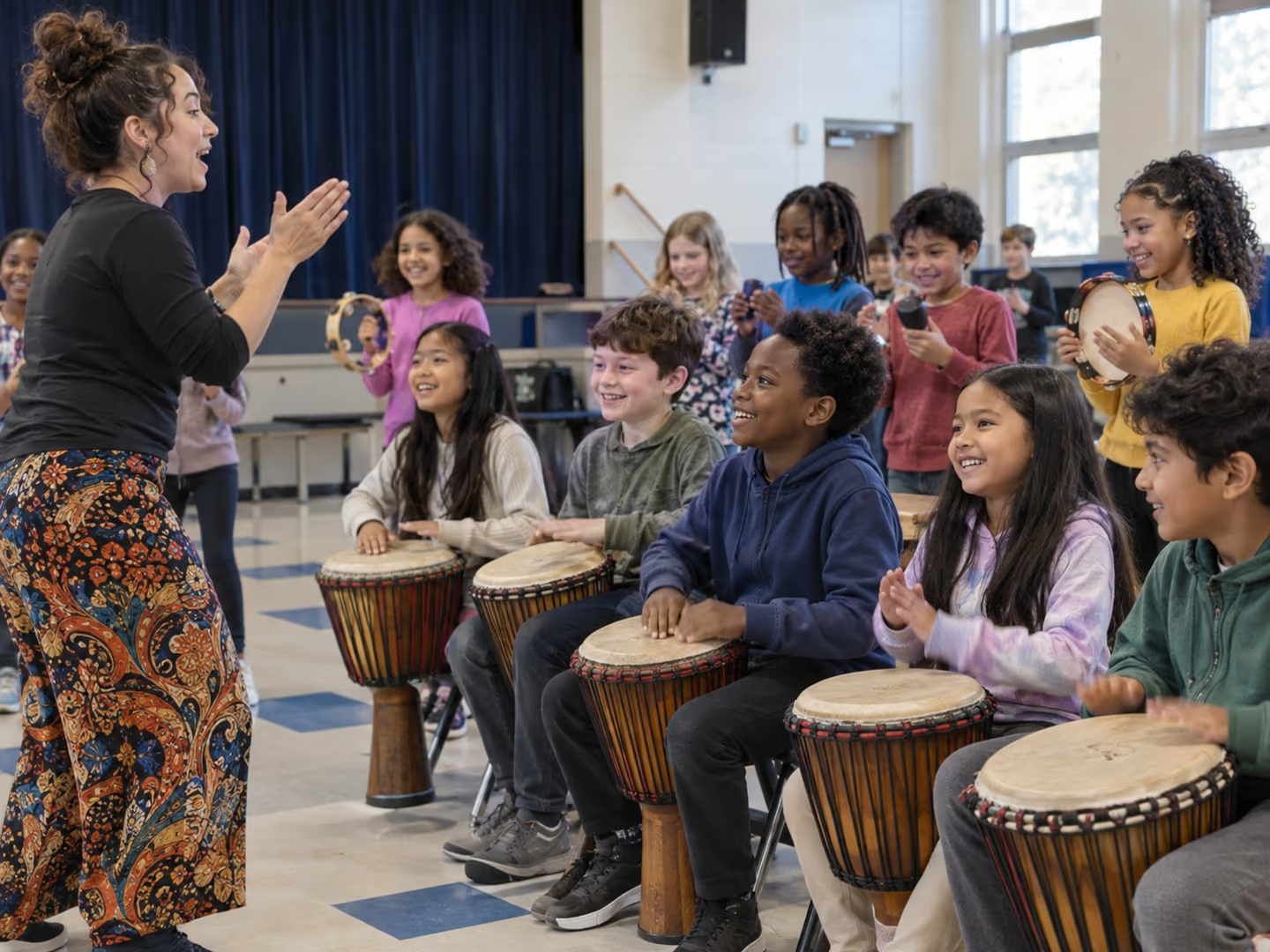
K-12 students in schools where music and arts programming has been reduced, underfunded, or unavailable.
K-12 students
Preschool through high school, weighted heavily toward elementary and early-childhood classrooms. Those are the years when musical ability is most developable.
Under-resourced schools
The programs we fund work in under-resourced Los Angeles County schools, where arts funding has been reduced or was never there to begin with.
No cost to families
Support reaches kids during their own school day. A child's access to music shouldn't depend on what their family can pay for lessons.
A full school year, in six phases.
Happy Gives is small on purpose. Before we fund anything we ask two questions. How can music programs be better? And who is already doing that work well?
To answer them, founder Happy Montana brings in advisors: working music professionals and classroom teachers who have taught kids and run programs themselves. They know what a good session looks like from the inside. They help the Foundation look closely at a program before any money moves.
That is how the first initiative began. Bloom Arts Foundation was already doing strong work in schools. Happy Gives supported them in building out a framework of structure around the work they were already doing.
We worked with them to shape one thing in particular: the curriculum is laid out so a donor can see directly into the real impact at each phase. You can see what is changing while it is changing, instead of hearing about it once the year is over.
The programs described here are designed and delivered by Bloom Arts Foundation, our program partner. Happy Gives Foundation raises the funding and grants it onward. We do not run classrooms, employ the teaching artists, or set the curriculum.
The six phases, and what you can see at each one.
One phase at a time, across an academic year. Each one builds a specific capability, and the last one asks kids to make something of their own.
- 1
Rhythm
Finding and holding a beat.Body-based pulse work: walking in time, echo exercises, call and response. Rhythm is the base layer every later phase is built on, and a lot of kids now arrive without it.
What a donor can seeWhether a class can find and hold a beat together. You can hear it from the door.
- 2
Listening
Hearing others, not just yourself.Students learn to hear space and respond to each other rather than just perform. In an ensemble, leaving room matters as much as playing, and that habit carries well past the music room.
What a donor can seeKids leaving space for each other instead of playing over the top.
- 3
Voice
Discovering that your idea counts.Students get asked questions instead of only being told what to do, and their answers shape what the class makes. This is where feeling safe turns into being brave enough to try something.
What a donor can seeStudents answering out loud, and their ideas ending up in the music.
- 4
Leadership
Taking a turn out front.Groups of four to six students get a creative prompt, a few minutes to build something together, and then they show it to the class for feedback. Quiet kids get a turn to lead, not only the confident ones.
What a donor can seeSmall groups presenting work they built themselves, quiet kids included.
- 5
Ensemble
Playing a part inside a whole.Students play multi-part arrangements and learn every part rather than only their own, so any student can hold any role. Time, pulse, listening and flexibility all have to work at once.
What a donor can seeA class holding several parts at once, and swapping parts without falling apart.
- 6
Original Work
Making something that did not exist.Students compose. An original song, an original rhythm, a few bars of movement over a beat they invented. Bloom Arts reports that classes as young as preschool write their own music.
What a donor can seeMusic that did not exist before the school year started.
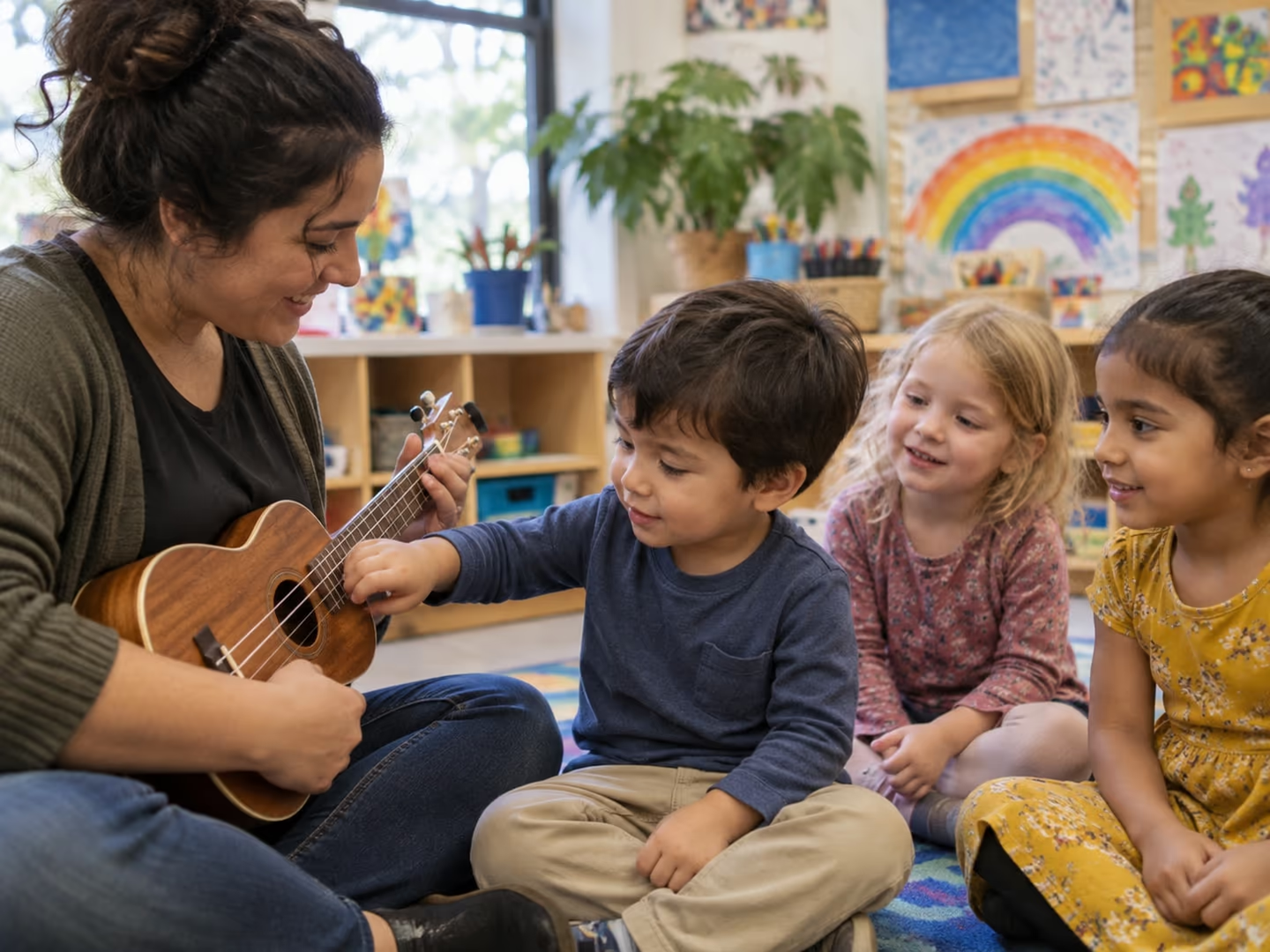
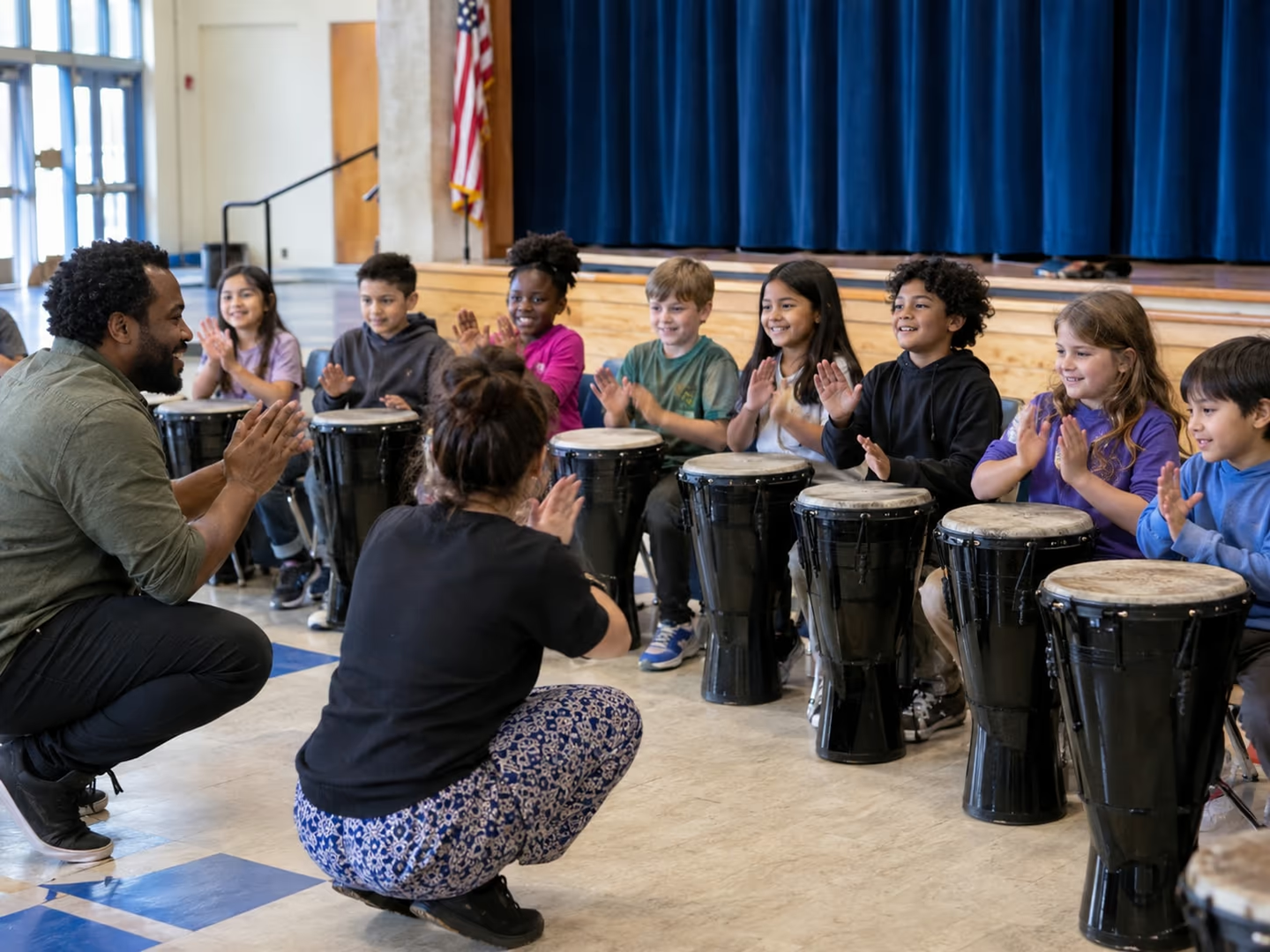
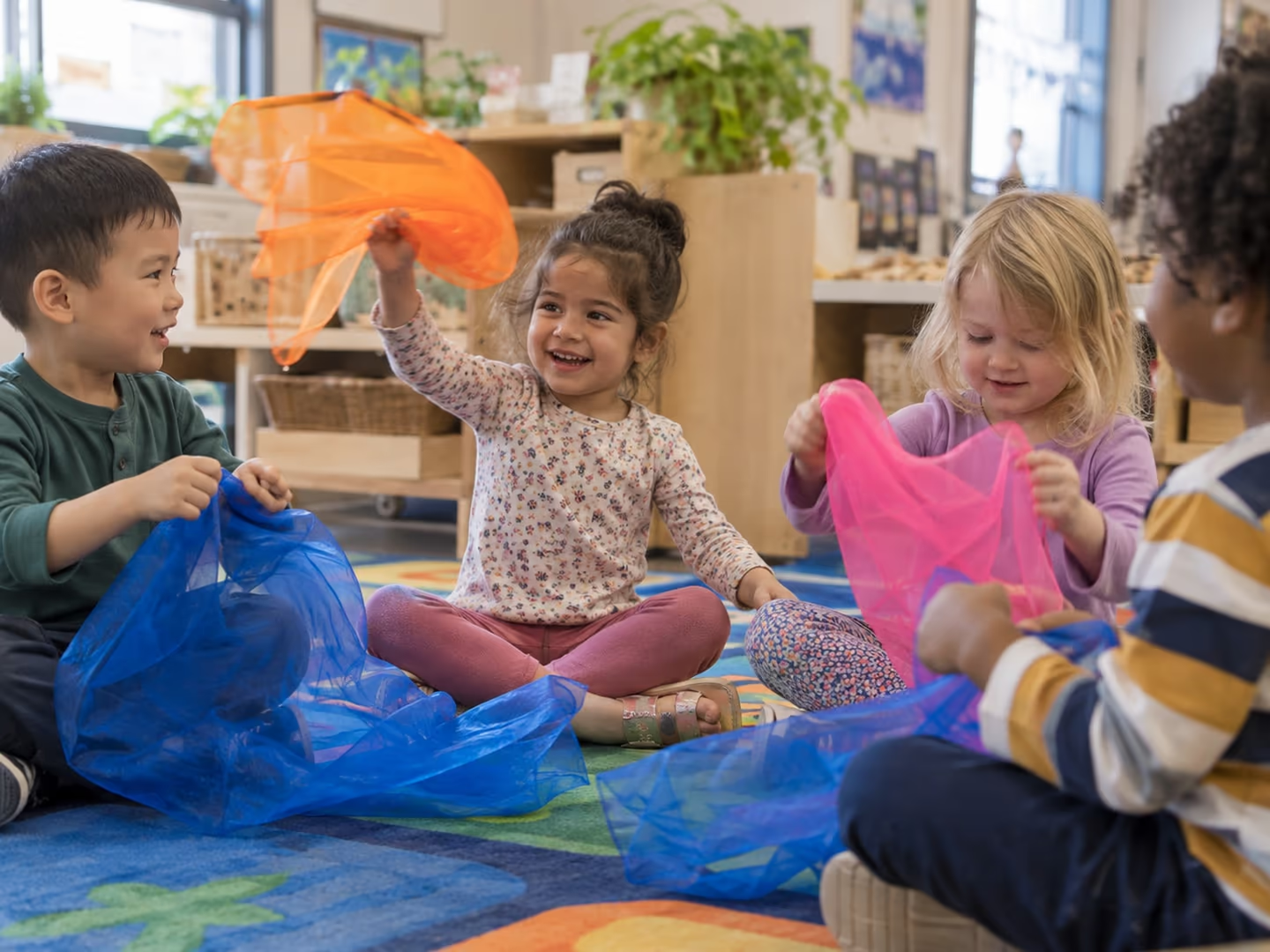
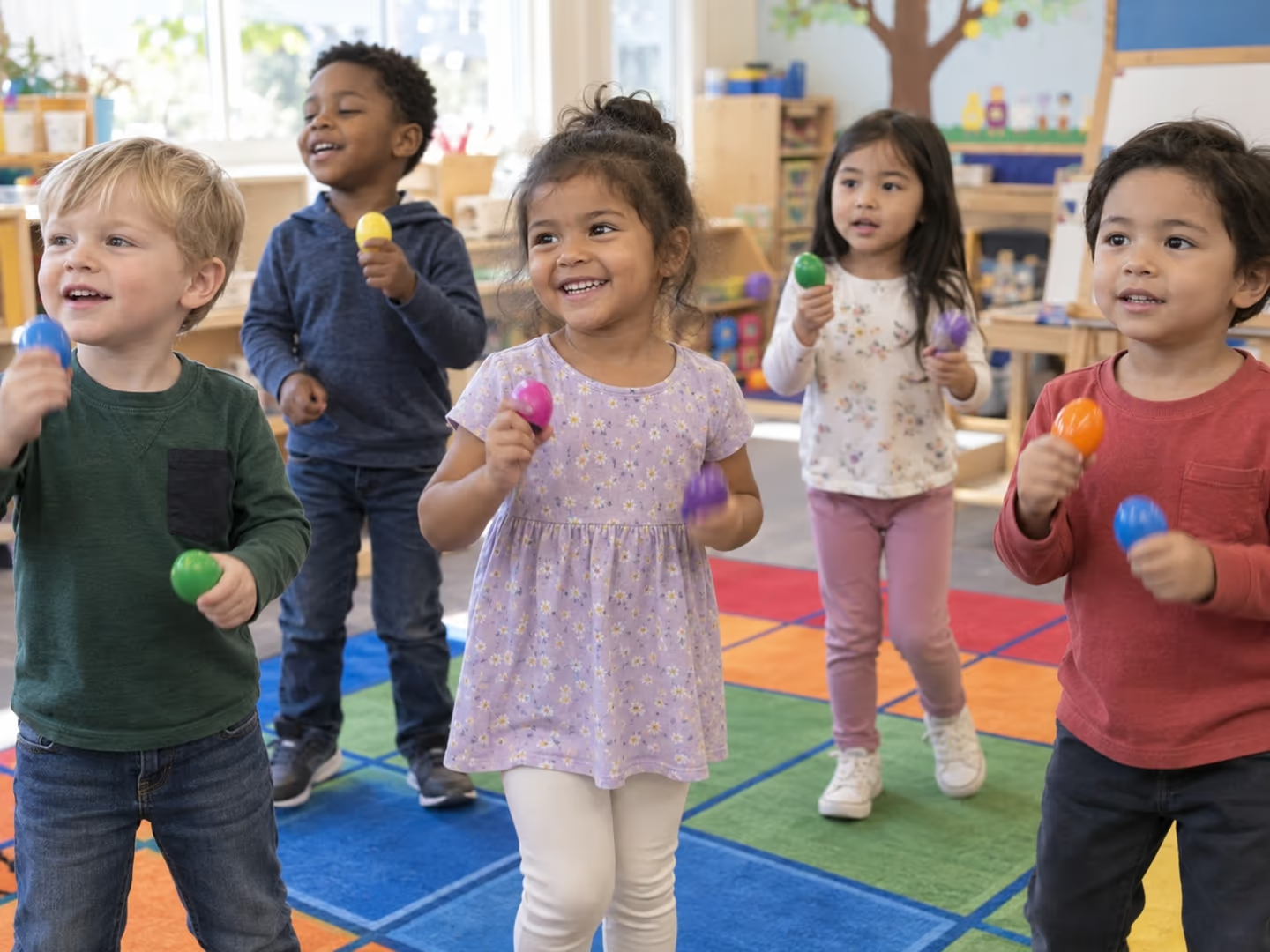
These are the instruments in the room. Grant money goes to the practical costs behind them: the instruments themselves, and the working artists qualified to teach with them.
- Voices
- Hand drums
- Shakers
- Recorders
- Ukuleles
- Rhythm sticks
- Scarves
- Resonator bells
- West African Remo drums
- Gankogui bells
- Shekere gourd shakers
Working musicians, in the classroom.
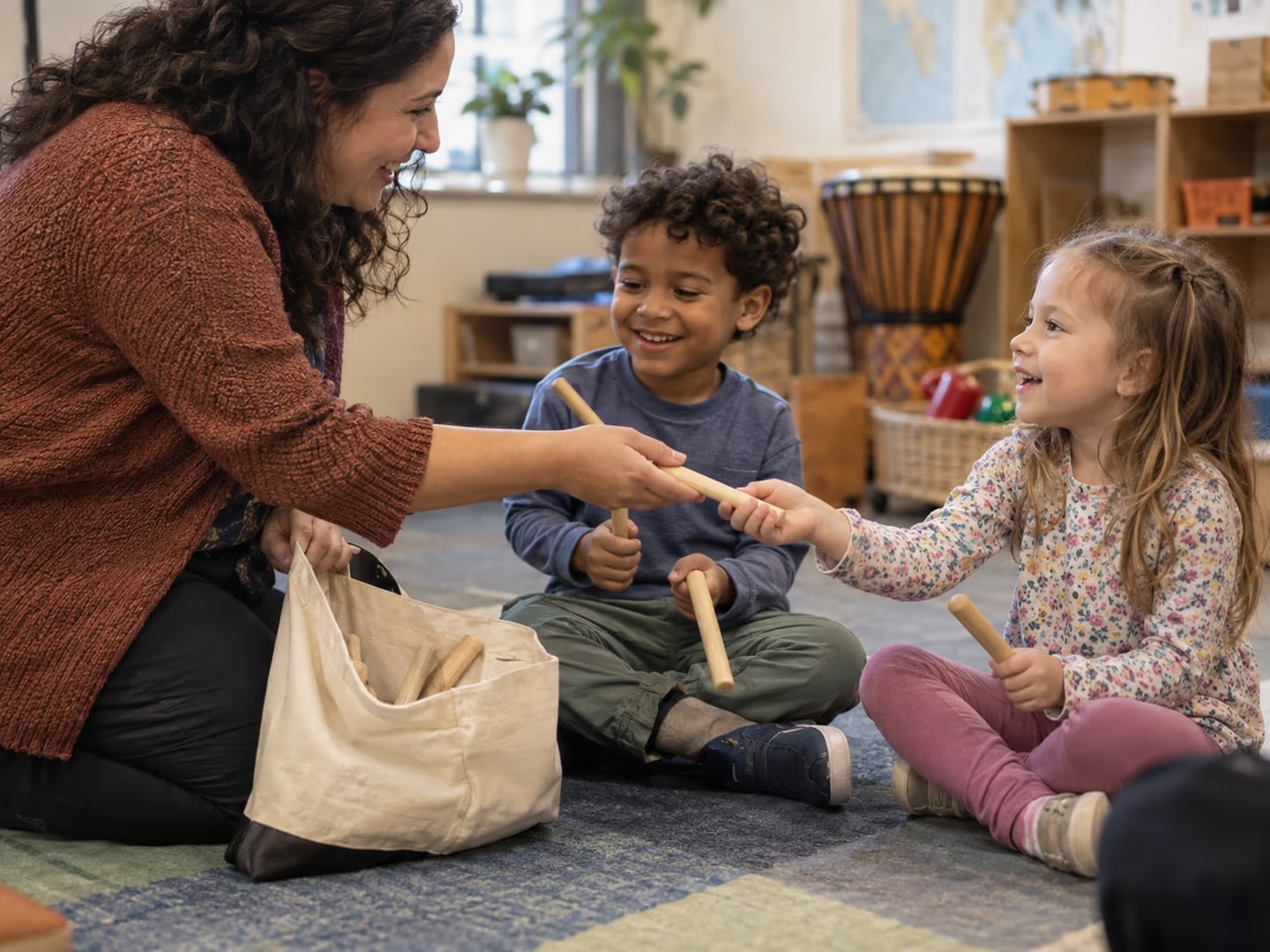
We support programs that put working professional musicians in front of kids, rather than a generalist with a worksheet. Bloom Arts Foundation recruits performing musicians and gives them a structured framework for teaching in under-resourced schools.
Every one of their teaching artists is background-checked and fingerprinted, shadows the executive director before working independently, and is reviewed with feedback from classroom teachers, administrators and families. They are trained across PreK through 6th grade, including support for students with diverse learning needs.
Those artist-educators are placed on purpose, in under-resourced Los Angeles County schools.
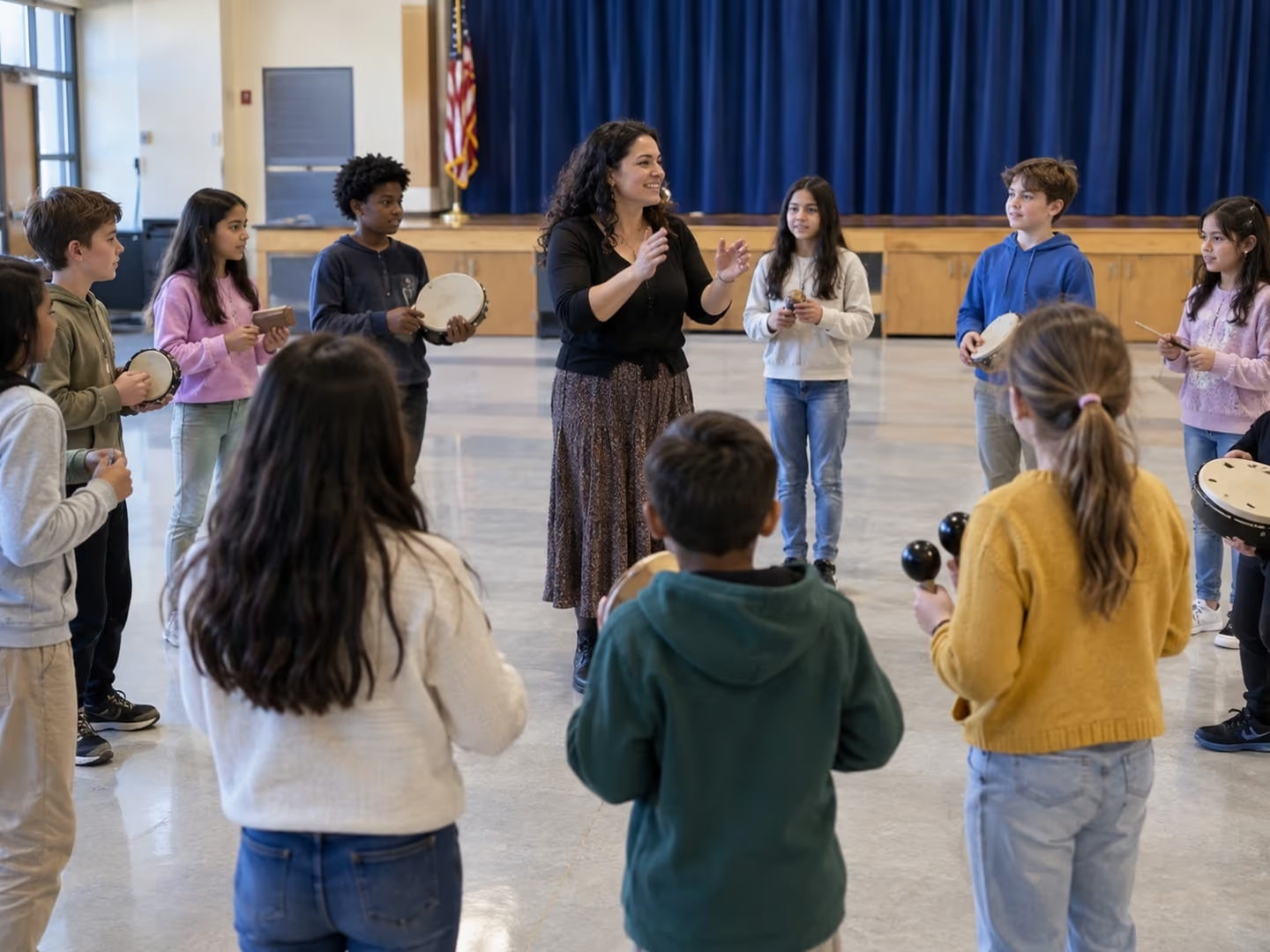
A look inside the program scenarios.
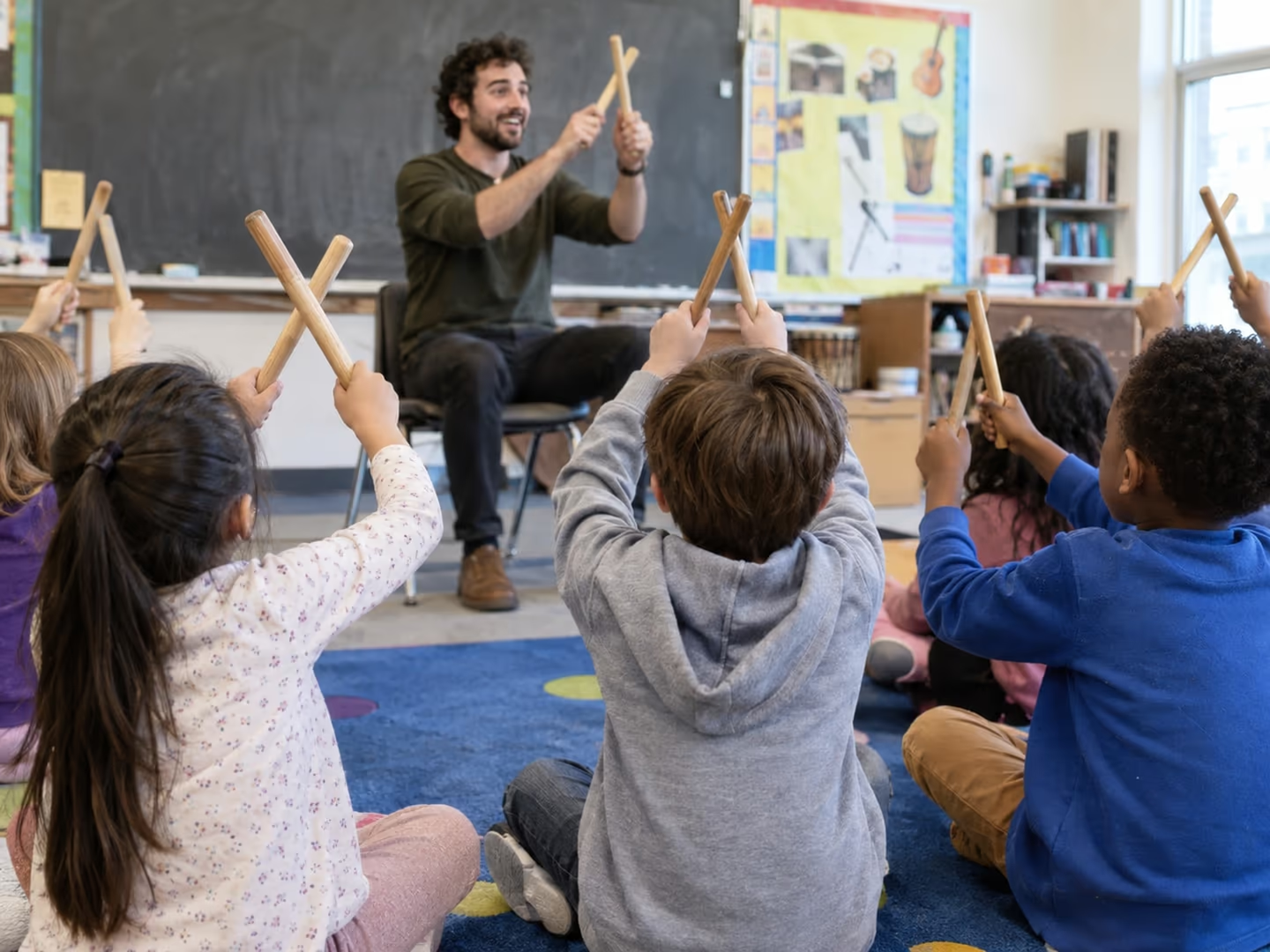
For privacy reasons, these AI-generated images recreate the exact scenarios shown in photographs from Bloom Arts Foundation programs, using fictional participants. They do not depict actual children or document any particular Happy Gives grant.
The window closes around age nine.
Musical and creative aptitude is most developable before roughly age nine. That finding comes from Gordon Music Learning Theory, and it is one of the reasons we fund where we fund.
Bloom Arts Foundation sees the consequence in its own classrooms. Students who reach fifth grade without early musical exposure often struggle to find a basic pulse, and it is not a talent problem. The window in which that skill forms most easily has already narrowed.
So money aimed at elementary and preschool classrooms does disproportionate work. That is where we concentrate grants.
One of the things we look for is a program grounded in something. This one rests on three established frameworks.
- Orff Schulwerk
- Rhythm before notation, play before theory, and the premise that every person is innately musical.
- Gordon Music Learning Theory
- Musical aptitude is most developable early in childhood, which makes early exposure foundational rather than optional.
- Elements of Dance
- Body, action, space, time and energy. Movement treated as a language running alongside music.
What Bloom Arts' own surveys report.
These are Bloom Arts Foundation's own survey results for its own programming. We publish them because they describe the work our grants support.
Increased sense of community and feeling included
Improved mood, enthusiasm and patience
More confidence to speak and participate in class
Boosted creative thinking and problem solving
Enhanced ability to work collaboratively
Source: Bloom Arts Foundation's own internal surveys of its own programming, reporting the share of students who improved. These figures belong to Bloom Arts Foundation and are not measurements by Happy Gives Foundation.
So where does the money come from?
We work with Gen C Coffee and Purity Coffee, and with their customers, to raise the money that makes the grants possible. The Foundation holds it and grants it onward, and Bloom Arts Foundation spends it on programming inside schools.
Our first initiative has a goal of raising $1,000,000 for music programs in schools, granted to Bloom Arts Foundation.
See our partners→Kids need creativity. Music gives them a real way in.
A kid who never finds the beat in third grade rarely goes looking for it in ninth. We exist to move money to the people already standing in those classrooms, while the window is still open.
Happy Montana is a songwriter and founder who believes art changes lives. He spent years volunteering with The Art of Elysium, sharing music with thousands of kids, and he saw up close what creativity does for a kid who needs something to hold on to.
That same spirit runs through everything he makes, from music to purpose driven ventures built to spark more beauty, joy and possibility in the world.
Get in touch→Happy Gives Foundation is a registered 501(c)(3) nonprofit based in Goodlettsville, Tennessee. Donations to Happy Gives may be tax deductible to the extent allowed by law. We are listed in IRS Publication 78 data as an organization eligible to receive tax deductible charitable contributions.
Happy Gives was created to move funding into work that actually serves people. Right now that means music education for kids. We raise charitable contributions through partnerships with mission-aligned businesses, grant them to Bloom Arts Foundation, and document the path so a donor can follow it.
Publication 78 Listed: Yes
Deductibility Code: PC
Tax Deductible Giving↓
Happy Gives Foundation is a recognized 501(c)(3) public charity. According to IRS Publication 78, Happy Gives has deductibility code PC, which generally means contributions are tax deductible if you otherwise qualify to claim the deduction. The IRS treats PC organizations as public charities in the 50 percent limitation category.
For individual donors, the exact amount you can deduct depends on your tax situation and the type of gift. Under current IRS guidance, cash donations to qualifying public charities are generally deductible up to 60% of adjusted gross income, while some contributions may be subject to 50%, 30%, or 20% limits depending on the asset and circumstances.
Charitable deductions generally apply only if you itemize deductions on your tax return. Donors should keep records including the organization name, date, and amount.
If you are making a larger gift or donating property, it's smart to check with your tax advisor so you get the deduction right and do not let the IRS bonk you with avoidable confusion.
Questions? Send us a messagePrivacy Policy↓
Last updated: August 2026
Happy Gives Foundation is committed to protecting your privacy. This page describes how we handle information in connection with happy.gives.
Information We Collect
We collect only information you voluntarily provide, primarily your name and email address when you contact us directly.
How We Use Your Information
Your information is used solely to respond to your inquiries and to share updates related to our mission. We do not sell, rent, or share your information with third parties for commercial purposes.
Analytics
We may use basic, privacy-respecting analytics to understand how visitors find and use this site. We do not use behavioral tracking or advertising cookies.
Your Rights
You may contact us at any time to request removal of your information from our records.
Contact
Send us a message919 Conference Dr., Suite 4-290
Goodlettsville, TN 37072-1933
Terms of Service↓
Last updated: August 2026
Welcome to happy.gives, operated by Happy Gives Foundation, a registered 501(c)(3) nonprofit organization.
Use of This Site
This website is for informational purposes about Happy Gives Foundation, our mission, and our partnerships. You may use this site for lawful, personal, non-commercial purposes. Redistribution or reproduction of content without permission is not permitted.
Photography
For privacy reasons, classroom images are AI-generated recreations of the exact scenarios shown in photographs from Bloom Arts Foundation programs. All depicted participants are fictional. These images do not document any particular Happy Gives grant.
No Warranties
This site and its contents are provided "as is." We make no representations regarding accuracy, completeness, or availability of any information herein.
Limitation of Liability
Happy Gives Foundation shall not be liable for any damages arising from your use of this site or reliance on any content herein.
Charitable Contributions
Happy Gives Foundation is a recognized 501(c)(3) public charity (EIN: 39-4579958). Contributions may be tax deductible to the extent permitted by law. Please consult a qualified tax advisor for your specific situation.
Governing Law
These terms are governed by the laws of the State of Tennessee.
Contact
Send us a message